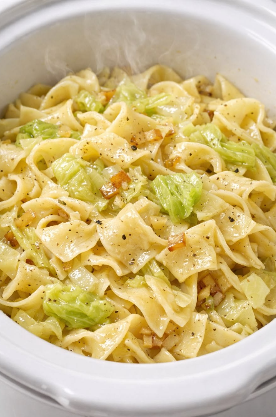
Hungarian Cabbage and Noodles, known as Káposztás Tészta, is a classic Hungarian comfort food made with caramelized cabbage and tender pasta. The cabbage is slowly cooked until soft, golden, and naturally sweet, then tossed with noodles for a simple but deeply satisfying meal.
With only a handful of inexpensive ingredients, this traditional dish shows how Hungarian home cooking can turn everyday staples into something remarkably flavorful.
Why You’ll Love Káposztás Tészta
- Simple, budget-friendly ingredients
- Sweet, deeply caramelized cabbage
- Easy enough for a weekday meal
- Traditional Hungarian comfort food
- Naturally meat-free
- Ready in under an hour
Ingredients
For the Cabbage
- 1 medium green cabbage, about 1 kg
- 2 tablespoons vegetable oil or lard
- 1 tablespoon granulated sugar
- 1 teaspoon salt
- ½ teaspoon freshly ground black pepper, plus more for serving
For the Noodles
- 400 g square Hungarian egg noodles or other broad egg noodles
- Salt, for the cooking water
- 1 tablespoon butter or oil, optional
How to Make Hungarian Cabbage and Noodles
1. Prepare the Cabbage
Remove any damaged outer leaves from the cabbage.
Cut the cabbage into quarters and remove the tough core.
Finely shred or grate the cabbage.
2. Salt the Cabbage
Place the shredded cabbage in a large bowl and sprinkle it with about 1 teaspoon salt.
Mix well and leave it for approximately 15–20 minutes.
The salt draws out moisture and helps the cabbage cook down more efficiently.
3. Squeeze Out the Moisture
Take handfuls of cabbage and squeeze firmly to remove as much excess liquid as possible.
This step is important because drier cabbage will caramelize rather than simply steam.
4. Caramelize the Sugar
Heat the oil or lard in a large, wide skillet over medium heat.
Add the sugar and allow it to begin turning a light golden caramel color.
Watch carefully because sugar can burn quickly.
5. Cook the Cabbage
Add the squeezed cabbage carefully to the skillet and stir well.
Cook over medium to medium-low heat for approximately 25–30 minutes, stirring regularly.
The cabbage should gradually become very soft and develop a beautiful golden-brown color.
6. Season
Add freshly ground black pepper and taste before adding any additional salt.
Traditional Káposztás Tészta is particularly good with a noticeable amount of black pepper.
7. Cook the Noodles
While the cabbage finishes cooking, bring a large pot of salted water to a boil.
Add the noodles and cook according to the package instructions until tender.
Drain thoroughly.
8. Combine
Add the cooked noodles directly to the caramelized cabbage.
Toss everything together until the noodles are evenly coated and the cabbage is distributed throughout.
Cook together for another 2–3 minutes.
9. Serve
Serve the Káposztás Tészta hot with additional freshly ground black pepper on top.
Tips for the Best Káposztás Tészta
Don’t rush the cabbage. Its rich flavor develops through slow cooking and caramelization.
Use a wide skillet whenever possible. More surface area allows moisture to evaporate and helps the cabbage brown.
Squeeze the salted cabbage thoroughly before cooking. Too much water makes proper caramelization difficult.
For a more traditional texture, look for Hungarian square egg noodles (kockatészta). Broad egg noodles are a practical substitute when they’re unavailable.
Sweet or Peppery?
One interesting feature of Káposztás Tészta is that Hungarian families may enjoy it differently.
A savory version is served with plenty of freshly ground black pepper, while some people prefer adding sugar at the table for a sweeter version.
You can serve both sugar and black pepper alongside and let everyone choose.
What to Serve with Cabbage and Noodles
Káposztás Tészta can be enjoyed as a simple main dish or served as part of a larger Hungarian meal.
It pairs nicely with:
- Hungarian pickles
- Cucumber salad
- Pickled peppers
- A simple green salad
- Hungarian-style roasted meats when served as a side
How to Store Leftovers
Allow leftovers to cool before transferring them to an airtight container.
Store in the refrigerator for up to 3 days.
Reheat gently in a skillet with a small amount of butter or oil. This method can also create delicious lightly browned edges on some of the noodles.
Frequently Asked Questions
What is Káposztás Tészta?
Káposztás Tészta is a traditional Hungarian pasta dish combining cooked noodles with finely shredded cabbage that has been slowly caramelized until tender and golden.
What noodles should I use?
Hungarian square egg noodles, often called kockatészta, are an excellent choice. If you can’t find them, broad egg noodles or another relatively flat pasta can work.
Why do you salt the cabbage first?
Salting draws moisture from the cabbage. Squeezing out that liquid makes it easier to achieve the concentrated, caramelized flavor characteristic of the dish.
Can I make Káposztás Tészta without meat?
Yes. The dish itself can be completely meat-free. Use vegetable oil instead of lard if you want a vegetarian version.
More Hungarian recipes to try